Index
Receive our newsletter
Living in a large city has become challenging for many people. Rent prices continue to rise while available housing remains limited, making it harder to secure a place in central neighborhoods without long searches or rigid conditions. As a result, secondary cities are gaining attention. These are municipalities located near major urban areas, with solid transport links and access to the same economic environment. What once felt like a temporary workaround is now turning into a stable residential option, allowing people to move away from city centers without giving up professional or social opportunities.
These locations maintain close ties with major cities. They share labor markets, infrastructure, and daily commuting flows, yet they offer more attainable rent levels and a wider range of housing options. This mix has accelerated their expansion and reinforced a trend that appears consistently across different countries, supported by official statistics and market research.
Why secondary cities are growing
Rising rent levels in major urban areas remain the main driver behind this shift. Over the past decade, housing costs have increased across most developed economies. Between 2015 and 2024, prices rose by 54% in the United States, 32% in China, and nearly 15% across the European Union, with Spain reaching 26%, according to the OECD. Under these conditions, families, students, and professionals increasingly look toward nearby municipalities, where housing budgets stretch further and the search process feels more manageable.
Housing type also plays an important role. Secondary cities tend to offer a higher share of larger homes and newer developments, which translates into more space and better overall living standards. Improved transportation networks and the wider adoption of hybrid work models have further strengthened this appeal, reducing the need for daily proximity to city centers.
Urban planning capacity adds another layer to this trend. Many metropolitan-adjacent municipalities have greater room for residential development. This allows them to absorb displaced demand while easing upward pressure on prices, something that is far more difficult in dense urban cores.
A global trend across different markets
United States
In the United States, this pattern appears clearly in fast-growing regions. Austin, Texas, has seen a strong increase in residential construction over recent years, yet growth extends well beyond the city itself. Georgetown, located about 30 miles north of Austin, recorded population growth of more than 51 percent between 2020 and 2024 and surpassed 100,000 residents, according to MySA. Many new arrivals come from the wider metropolitan area, drawn by lower living costs and more spacious housing.
A similar situation can be seen in the Phoenix metropolitan area. Cities such as Buckeye, on the western edge of the region, have absorbed a significant share of housing demand shifting away from the urban core. Data from the U.S. Census Bureau show that Buckeye has more than doubled its population since 2010, placing it among the fastest-growing cities in the country.
Spain
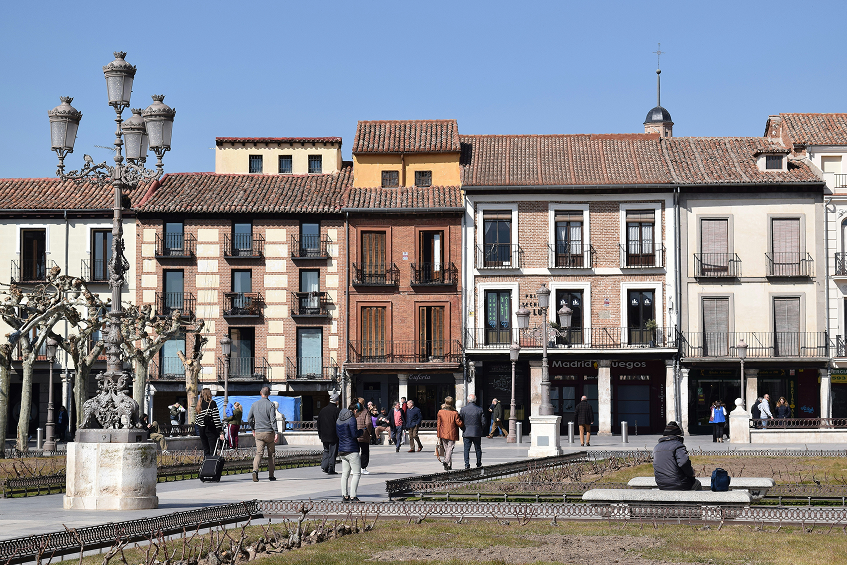
In Spain, the move toward secondary cities is especially visible around Madrid and Barcelona. The 2025 rental demand study by idealista highlights municipalities such as Leganés, Móstoles, Getafe, Fuenlabrada, Torrejón de Ardoz, and Alcalá de Henares as some of the most sought-after rental markets near Madrid. Around Barcelona, demand has increased in cities like L’Hospitalet de Llobregat, Badalona, Santa Coloma de Gramenet, Cornellà, Sant Cugat, Sabadell, and Terrassa, as renters search for options outside the city center.
Germany
Germany offers another clear example. In Berlin, higher rents and limited housing availability have pushed part of the demand toward Brandenburg. According to Destatis, the region’s population grew by more than 7 percent between 2013 and 2023. Well-connected municipalities have absorbed much of this growth, strengthening their role within the national residential market.
France
In France, high rent levels in Paris have intensified demand in surrounding departments within Île-de-France. Areas such as Seine-Saint-Denis and Val-de-Marne account for a large share of regional residential growth, based on data from INSEE. Proximity to the capital and improved transport infrastructure have made these locations increasingly attractive to new residents.
Netherlands
Housing shortages in Amsterdam have also encouraged growth in nearby cities. Almere surpassed 220,000 residents in 2024 and grew at a pace well above the national average, according to Statistics Netherlands (CBS). This development highlights how secondary cities can capture demand once central markets reach capacity.
What the growth of secondary cities means
The rise of secondary cities is reshaping residential geography and pushing policymakers to rethink metropolitan planning. As demand spreads outward, pressure on central districts eases, but fast-growing municipalities face new challenges. Transport systems, public services, and infrastructure need continuous adjustment to maintain living standards and avoid uneven development.
From a real estate perspective, these cities are becoming increasingly important development hubs. Developers, public authorities, and housing operators are shifting focus toward locations with room to grow and lower saturation. Over time, this expansion supports a broader distribution of economic activity across metropolitan regions.
The growth of secondary cities reflects deeper structural changes within rental markets. Data from the United States and Europe point to a consistent trend in which housing demand no longer concentrates solely in major capitals but extends into their surrounding areas. This shift marks a new phase in the urban evolution of metropolitan regions.

Jorge Padilla
Jorge Padilla, with a degree in Business Administration from Tecnológico de Monterrey and a Master’s in Marketing from Trinity College Dublin, has three years of experience in eCommerce and marketing across sectors such as Food Service, Tourism, and Education. He has worked in international environments in LATAM, Dublin, and Madrid, and holds a Google Digital Marketing certification. He is currently a Marketing Assistant at Lodgerin, managing digital campaigns, SEO optimization, and strategies for brand growth and conversion.